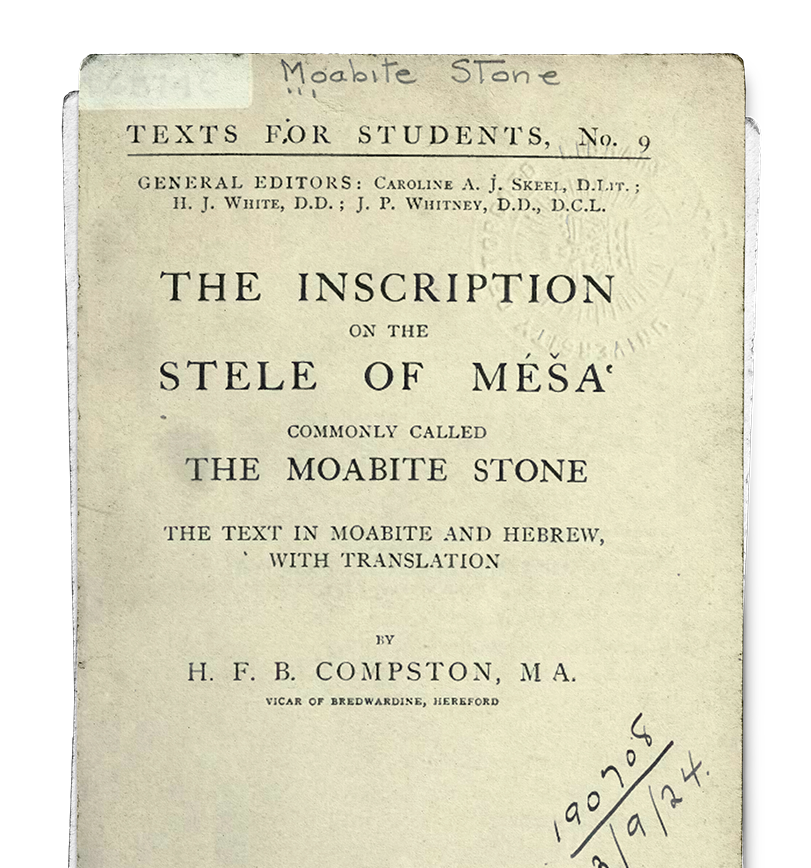
From the Louvre’s website:
“The arched shape of the stele and the basalt used are characteristic of the votive steles erected in the Levant since the Bronze Age, from Ugarit on the Syrian coast to Hazor in Galilee.
The complete absence of figurative representation on this particular stele is exceptional, however, as is the predominant place given to the text.
With its thirty-four lines, it is “the most important discovery ever made in the field of Oriental epigraphy,” as proclaimed by Ernest Renan.
The glorification of the king and his undertakings were a standard part of the traditional literature of royal ideology in the ancient Orient and Egypt.
The inscription features the earliest written occurence of the world Israel and constitutes the most detailed documentary source of information about the kingdom of Moab and its rivalry with the kingdom of Israel since the time of King Omri and his successors, particularly Ahab (see the Bible, 2 Kings 3-4).
It also cites the name of the great god of Moab, Chemosh, whose spiritual “son” Mesha claims to be. Chemosh was probably the god of storms that appears on another Moabite stele, anepigraphic this time, the stele found at Schihan showing a warrior god brandishing a spear in a pose commonly found found on Levantine steles.
King Mesha’s victories and constructions concern mainly the northern territories of Moab, with the tribe of Gad and Madaba.”