A major clue to your lost ancestry isn’t in Africa.
It isn’t locked up in the Vatican.
It isn’t buried in some archive overseas.
For over a century, all the answers to your lost ancestry have quietly been guarded — right here in America — in a safe.
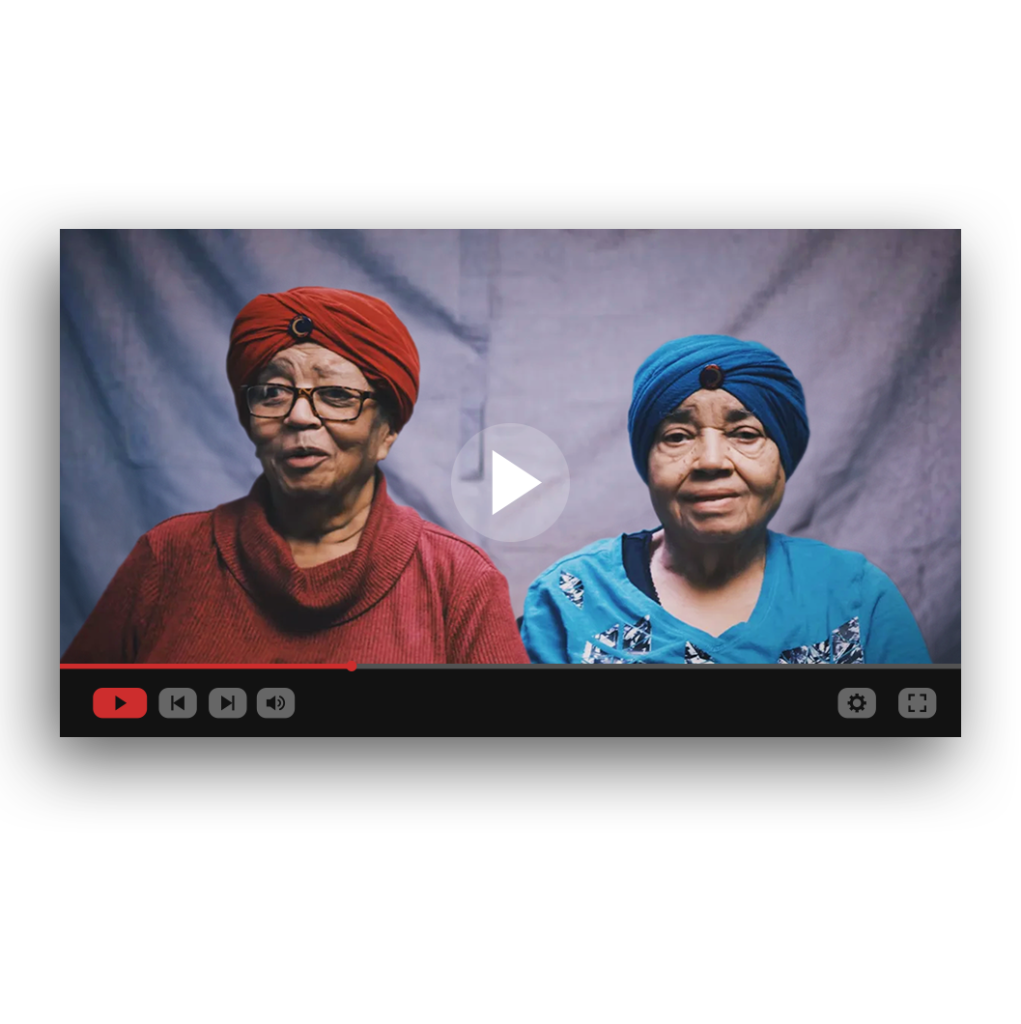
This is the firsthand account of the women who fought to keep the contents of that safe out of the wrong hands. And the two women who witnessed it all in person…
These two elder sisters are the longest living members of the Moorish Science Temple of America. A community over a century old — built to do what no institution was ever willing to do for you: teach your lost culture and preserve your true lineage from disappearing forever.
What you are about to hear is their story. Firsthand. Unscripted.
And it’s never been told on camera.
Until now…
Transcript:
[0:01] A major clue to your lost ancestry isn’t in Africa. It isn’t locked up in the Vatican. It isn’t buried in some archive [0:10] overseas. For over a century, all the answers to your lost ancestry have quietly been guarded — right here in America — in a safe. [0:22] This is the firsthand account of the women who fought to keep the contents of that safe out of the wrong hands, and the [0:30] two women who witnessed it all in person. These two elder sisters are the longest living members of the Moorish [0:38] Science Temple of America, a community over a century old — built to do what no institution was ever willing to do for [0:46] you: teach your lost culture and preserve your true lineage from disappearing forever. What you are about to hear is their story. Firsthand. [0:58] Unscripted. [1:00] And it’s never been told on camera. Until now.
[1:06] Introducing to you all, we have Sister Patricia Newton El, Sheikess, and we also have Sister [1:15] Diane O’Neal Bey, Sheikess. These sisters have been in the Moorish Science Temple of America for over 71 years. Welcome.
[1:28] How old were you all when y’all joined the Moorish Science Temple of America? I was 12 years old when I joined. [1:37] I was approximately 10 years old when I first joined. And you all have been members of the Moorish Science Temple of America since what year? [1:47] That’s a long time ago. Whatever year I was 12 years old. I’m 81 now. [1:52] It was like 1956, somewhere around that year. That’s long.
[1:59] Who was the Supreme Grand Sheik when you all joined the Moorish Science Temple of America? [2:03] When we joined the Moorish Science Temple of America, Brother O. Lewis El was — was Supreme Grand Sheik. [2:10] Did y’all have a big membership? [2:13] No, it was a very small membership at that time. We were open to the public [2:20] initially, but you weren’t advertised to the public, you know. So, people [2:28] would come, you know, the members would bring — would bring people, but as far as people just walking in off the street, [2:34] you know, we weren’t open, because we were at 3438 Langley Boulevard in Chicago, Illinois — [2:42] 4813, excuse me, [2:44] 4813 South Langley in Chicago, Illinois, which was a residential building. [2:52] So, we didn’t have that much room.
[2:55] And Sister Delia Mealy El, she didn’t have a lot of people walking in. [3:05] When you say she didn’t have a lot of people walking in, she wasn’t the Supreme Grand Sheik, was she? [3:10] No, she — no, she was not the Supreme. She was the guardian. Yeah, we called her the guardian of the Moorish Science Temple of America. And this was her residence. [3:22] She was the widow of Brother E. Mealy El. And who is Brother E. Mealy El? [3:30] He was appointed by the Prophet to be the first — he was the first Supreme Grand Sheik. [3:38] And Sister Delia Mealy El, that was her — that was his what? Wife. His wife. And what happened to Brother E. Mealy El? [3:48] He passed away before we were born.
[3:51] As members — as young members of the Moorish Science Temple of America, [3:56] what — what was y’all’s responsibilities as children? [4:01] As children, we didn’t have any real responsibilities in the temple other than to come. And also our [4:08] responsibilities as children of the Moorish Science Temple of America, we were required to [4:14] sit quiet during the meeting and listen, you know, to the Supreme Grand Sheik. [4:23] And also whenever — us as children, [4:30] you know how children get a little rowdy sometimes. Sister Delia Mealy El, [4:38] she would give us that one little look, [4:40] you know, and we knew to straighten up real quick, [4:44] you know. And we were also responsible for knowing the questions in the Prophet’s Questionnaire, and that was, [4:53] you know, our responsibilities.
[4:56] You all been in the Moorish Science Temple for over 71 years. [5:01] Why haven’t you all given up? [5:07] Well, we haven’t given up because we have faith in the Prophet. [5:15] We — that was instilled in us by Brother O. Lewis El, the Supreme Grand Sheik at that time when [5:21] we joined, and Sister Delia Mealy El. They instilled in us faith and love, and [5:31] the principles that they instilled in us remain with us today.
[5:37] What she said, plus our guardian, Sister [5:45] Pearl Leftwich El, taught us from the time we were very small about the temple and about the Prophet. So as we grew older, [5:57] we joined and began with duties that we were assigned.
[6:07] And did y’all join because you all wanted to join, or y’all’s parents made y’all join? [6:14] We joined the Moorish Science Temple of America as young children, but our guardian, Sister [6:21] Pearl Leftwich El, she let us decide if we wanted to join or not. It was nothing — nothing that [6:30] was forced upon us. But one thing that our guardian, Sister Pearl Leftwich El — [6:36] one of our rituals was, you know, before we went to bed, you know, [6:44] we would read from the Quran, you know — [6:51] we call her Mama — but we would read from the Quran to Mama, you know, a verse or two each night, and we all would do [6:57] that. It was four of us at that time. So, and being around Sister Pearl Leftwich El, [7:05] she lived the Prophet. So that’s where — that’s where we come from, because [7:14] what the Prophet said, she made sure that’s what she did. She didn’t — she didn’t deviate. So that’s where we got our faith and our strength from, along with Sister Delia Mealy El.
[7:25] Every morning before we left for school, we said the Moorish prayer. We didn’t leave the house without saying the Moorish prayer.
[7:36] So, this Sister Pearl Leftwich El — was she there during the time of the Prophet? [7:44] No. If I can tell a story, she told us that [7:52] she owned a cafeteria on the west side of Chicago. [7:57] Who is she? My aunt, Sister Pearl Leftwich El, owned a cafeteria on the west side of [8:05] Chicago at that time. And she said men and women would come into the [8:13] cafeteria every Sunday afternoon, and they had on — had on fezes, and the [8:22] sisters had on turbans. And she asked them about these fezes, but she said — [8:29] she said called them funny hats. “What — what is with the funny hats?” [8:34] And they explained to her that they had been in the temple, and that there had [8:41] been a prophet, Noble Drew Ali, who came and taught them how to be Moorish American Moslems. [8:49] And she said that when she heard this, her words, if I remember correctly, [8:57] were, [8:59] “You mean there’s been a prophet and I didn’t know about it?” Is that what she said? [9:04] Yeah. She said, “You mean there — there was a prophet that came and he’s gone before I even know about it?” And she [9:13] told them that she wanted to come to a meeting.
[9:16] And she — she went to the meeting and she joined right then and there, because she said [9:24] that she believed what she heard, and she thought that she wanted to join and be a member of the Moorish Science [9:32] Temple of America.
And one funny thing — that when she came home, [9:40] to her — to her husband, and she told him that she had [9:48] joined the Moorish Science Temple of America, and her name now was Sister Pearl Leftwich El. You know, [9:57] the El was from joining the Moorish Science Temple of America. And he told her, “No, you cannot have an El at the end [10:07] of my name.” So she told him, she said, “Okay, fine then. I’m just Sister [10:15] P.E.” And so he said, “Oh, no, no, no, no — you can just — you can have the El on [10:23] there. You know, you can be Sister Pearl Leftwich El.” She said, [10:27] “Okay.” She said, “Because the El is going to go where I go.” [10:31] So that was a funny thing she used to tell us all the time.
[10:34] So, how long were you at the temple with Sister Delia Mealy El? [10:40] Well, Sister Delia Mealy El was there when we joined. Frankly, she’s one of [10:48] the first people that — that we saw. And when we would go to the temple, you know, before we joined, we was going to the temple when we was 2 and 3 years [10:56] old, you know. So we’ve always been in the temple as young children. And in case you didn’t know, we’re sisters. We were raised together. So, [11:07] we would go with Mama whenever she could take us, you know, ’cause it was — it was four of us. And when she could take [11:14] us, ’cause she didn’t drive, so we had to go on the bus. And usually if we got to the temple on the bus, then somebody would bring us home. [11:23] But we were with Sister Delia Mealy El at the temple until she passed away. [11:33] She was one of our inspirations.
[11:36] Would you happen to know when she passed? [11:40] I believe that was in the mid-’80s when she passed. Okay.
[11:46] So, how long was the Grand Sheik — you said Lewis Baker, right? O. Lewis El. [11:53] Okay. How long was he the Grand Sheik before your next Grand Sheik came in? [11:59] I don’t know how long Brother O. Lewis El was Grand Sheik. He was Grand Sheik when we were children.
[12:07] And the next Grand Sheik was Brother D. Bailey El. Brother David Bailey El. [12:15] And he was Grand Sheik for a very long time. I can’t remember how many years, but at least about 20 years he was Supreme Grand Sheik. [12:25] Brother D. Bailey El was great-grandson of Brother E. Mealy El, the Supreme Grand Sheik, by marriage, though.
[12:35] Okay. And after Brother D. Bailey El, who was the next Grand Sheik? [12:42] The next Grand Sheik was Brother P. Davis El. Y’all tell me something about him. [12:50] He was a very kind man. He was — he was an excellent Supreme Grand Sheik. We [12:57] respected and admired him very much. But Brother — [13:07] he had, you know, he had illness. He was — he was ill. So a lot of — [13:15] a lot of times he was, you know, kind of — kind of sick, but he always was there for the Prophet. I don’t care how — how [13:22] ill he was, you know, he would come to the temple and he would conduct the meeting, you know. And then sometime [13:30] after the meeting, he’d have to go sit down, but he was a very faithful member of the Moorish Science Temple of America. And he [13:38] believed in doing just what the Prophet said, the way the Prophet said do it. He didn’t like to deviate, [13:44] you know, and do things his way. He liked to — to follow the Prophet in all ways.
[13:52] You all were, from what I understand — and my understanding is not that good — you all were like a closed-in group where, [14:02] you know, everybody wasn’t allowed to walk in off the streets. [14:07] The Moorish Science Temple of America, when we were children, was mostly family [14:14] members and friends, because Sister Delia Mealy El was the caretaker, or the guardian, of the [14:23] Moorish Science Temple of America. And during the time when Brother [14:34] — with Brother E. Mealy El’s time, when he was, you know, when he was sick, and — and he passed, and the [14:43] membership was in kind of disarray because of the passing of the Chairman of the Moorish Science [14:51] Temple of America. There was a kind of turmoil where members that — [14:59] from other groups, they tried to take over the Moorish Science Temple of America and get the Prophet’s records, which [15:07] Sister Delia Mealy El, as the guardian of the Moorish Science Temple of America, would not turn over the records to the other people [15:16] that were trying to take over. And in that instance, [15:22] she was arrested and went to jail for not turning over the records. [15:29] And so she was really kind of fearful after she got out of jail. She was fearful of members or other outside [15:37] groups coming in. So therefore, we were kind of closed off because of — of — of this fear. And I [15:46] know they went to court, and to keep the records, which the court granted in Sister Delia Mealy El’s favor.
[15:55] So that’s why the group was kind of closed off — because of the turmoil and things that she went [16:03] through — because she was determined that the records would not go into anybody else’s hands to be distributed the way [16:12] they wanted to do it and — and take over the Prophet’s temple. So she was paramount in keeping the records. She had a — she had a [16:21] great big safe in her closet that she kept all the records in, under lock and key. And better not be caught going [16:31] in that closet, ’cause we were children, you know, you want to see everything, you know, but we weren’t allowed in there. So she [16:39] was the caretaker and she was the guardian of the Prophet’s records.
[16:43] When you say turmoil, I mean, who would this turmoil be coming from? Well, we were — we were children at [16:51] that time. So as far as where the turmoil was coming from, we only knew that it was members — not members, but outside [17:00] groups that were saying they were in the Moorish Science Temple of America, or ones that had been members of the Moorish Science Temple of [17:08] America, but they wanted to take over the Moorish Science Temple of America and do it the way they wanted to do it and make themselves, [17:18] you know, high members, and — and call themselves things that the Prophet never designated. [17:25] So that’s what she was trying to keep — the Prophet’s records straight — so that nobody could deviate or make — make things that weren’t correct, you know, [17:38] to go forward. And that’s why she went to jail rather than turn over the records to people that didn’t have good [17:46] intentions. That’s the way I would like to put it.
[17:49] So she also — she also had — when we grew up, she had letters. [17:58] She never threw out any of the mail that she had received about the temple or about the Prophet. [18:06] And we got a chance to sit down and read actual letters from the Prophet. And [18:15] I can’t really explain the feeling I had in my hands when I held those letters from the Prophet — and letters to the [18:23] Prophet — because she never threw any of those letters away. And she had letters to the Prophet, and letters from the Prophet, and letters from Brother E. Mealy El.
[18:35] So, from a little child — and you said that, [18:40] you know, y’all was going to the temple when you was one and two years old — and once you joined the Moorish Science Temple of America at the age of 10 and 12, [18:51] how did y’all keep this faith this long?
[18:57] Well, keeping the faith all these years, [19:03] it was easy because that’s the way we lived. We didn’t just read or talk about [19:09] it. Mama — which was Sister Pearl Leftwich El, you know, we call her Mama, ’cause she raised us — [19:18] she would instill in us the things that the Prophet said. You know, she would go through the house like — [19:25] and I’m going to do it just like she did: “Thank you, Allah, for everything.” You know, and we’d go like, [19:33] “Who are you talking to?” [19:34] Right? You know, “I’m talking to the Father God, and I’m talking to my Prophet, and I want to thank you for everything.” So, that’s the way we came [19:42] up. And, you know, as — as — as little children, you know, I’d go like, “Okay, [19:48] [unintelligible] I hate you,” you know — oh my goodness, was I in trouble. She did not allow us to say hate. Period. [19:57] Hate was a four-letter word. [19:58] No, that was — that was it. She didn’t like us, you know, she didn’t have us live that. So, we have the faith today because that’s the way we were brought up. That’s the way we lived every day. [20:10] It was love in the house.
Tell me about your faith. [20:18] Well, my faith is pretty much the same as hers. We grew up in a house where [20:25] the Moorish Temple was the head, pretty much, of the — or the faith of the [20:34] person who raised us. Sister — Sister Pearl Leftwich El, who raised us. And this is [20:43] what she taught us every day. Every day before we went off to school, we had to say the Moorish American prayer. Every [20:52] evening before we went to bed, we had to read a few verses — or sometimes a chapter, [21:00] depending on how she felt that particular day — from the Holy Quran of the Moorish Science Temple of America. [21:08] And that’s the only religion we knew growing up. We knew our friends were Christians, but we didn’t know what [21:17] Christianity was, because we were never taught that. We were only taught Moorish American literature.
[21:26] So, you all have been Moslems all of your life. [21:32] That’s right. We have been Moslems all of our lives. That’s amazing.
[21:41] So, [21:44] how did you all stay loyal to what y’all believe in? [21:54] Yeah. As far as I’m concerned, I stayed loyal to the Moorish Science Temple of America and — and [22:03] the Prophet, because that’s what was instilled in me. A lot of people, [22:10] you know, don’t realize — when we were Moslems, [22:14] growing up as Moslems, there weren’t a lot of Moslems around. We didn’t grow up with — with Moslems. Our friends weren’t Moslems. We went to school — [22:27] there were no Moslems. The only time we [encountered] Moslems was when we went into the city of Chicago, ’cause we lived in [22:34] the suburbs of Chicago. We went to the city of Chicago to the Moorish Science Temple, or we had the Moorish picnics and different things like that, [22:46] different activities. That was the only time we were exposed to Moslems. So, it wasn’t an easy time [22:54] growing up, with — with people that would say to us, you know, “My mother said that you don’t believe in God, [23:03] so therefore, you know, we can’t play with you.” And we would have to explain to them, [23:10] “Yes, we believe in God, you know, the same as you do. We believe in God.” But that still left us ostracized. [23:18] But Mama always explained to us, you know, “You have to do what’s right, not what other people do.” So it was [23:28] really easy for us to maintain our faith, because that’s all we knew.
[23:36] Brother P. Davis El, [23:39] where did he come from? I mean, was he already with you all? [23:43] No. Brother P. Davis El came from an outside temple that we called unauthorized. [23:53] We called the temple that he came from unauthorized.
[23:57] When I met the Grand Sheik — he was a member of the unauthorized [24:06] temple — and if I remember this correctly, he saw my name, [24:13] Diane O’Neal Bey, in — what do you call that? It was a book with all the employees. I worked at Chicago State [24:21] University at the time, and he saw my name in the book, and he came to my [24:28] office two or three times when I was out to lunch. And he told my co-workers to tell me that my brother had come to see [24:37] me. Well, the only brother that I knew at the time that would come to see me [24:44] was my actual brother, who lived in Michigan at the time. So, I called my brother Wilbur and asked him, “Was he in [24:53] Chicago?” And he said, “No, I haven’t been to Chicago in x number of days or months or whatever.” [25:01] So, I still didn’t know who this brother was that came to see me at my job.
[25:09] And one day, he came when I was not at lunch, and he said, “I’m your brother.” [25:16] And I’m looking at him like he’s some sort of nut. [25:23] Because he came to me — a strange man I had never seen. He had on a fez, if I remember correctly, [25:29] and he said, “I’m your brother.” And I’m going, “Oh, okay.” [25:35] And he explained to me that he was a member of the Moorish Science Temple of America. [25:42] He said he — he was in temple number one. [25:46] And I told him, “No, I’m in temple number one, and I’ve never seen you before.” And we had a con— a conversation about that.
[25:58] And I took it upon myself, ’cause our picnic was coming up, and I invited him and his [26:06] family to the picnic. But I wasn’t sure how they would be accepted, because [26:15] we never brought strangers to any of our events. [26:24] But he and his family came, and they enjoyed themselves. I believe they enjoyed themselves, [26:33] and other members of the actual temple [26:40] number one talked to him and realized that he was [26:45] about the Prophet, but that he was not in temple number one. [26:53] Brother E. Braswell Bey introduced Brother P. Davis El and brought his own family to the picnic, [27:00] and then later would come to our meetings on Friday night or on Sunday night.
[27:09] Who is this brother that you’re speaking about? [27:13] Brother E. Braswell Bey.
Note: This transcript has been cleaned from an automated transcription. Brackets indicate editorial corrections where the original audio was unclear. Names and organizational titles have been corrected with guidance from the subjects.